Chastity and genital piercings: how a device and jewellery interact
A chastity device and a genital piercing interact through pressure, moisture, metal contact and movement, and none of those are kind to a piercing that has not fully settled. Nothing should go near a device until the person who did the piercing says it is healed, because healing varies a great deal between people and placements and no timeline you read online applies to you. Some placements sit exactly where a device carries weight or catches, and those are worth discussing with a piercer before you buy anything.
Chastity and genital piercings turn up together often enough that the interaction deserves writing down properly. Both involve metal against skin in an enclosed, warm and often damp place, and both depend on skin tolerating steady contact. Put them together and you have two things competing for the same real estate. Sometimes that works fine for years. Sometimes it does not, and the ways it goes wrong are mechanical and predictable enough to be worth understanding before you find out the hard way.
One piece of framing first. This is general information about how the two things interact physically. It is not medical advice, it contains no healing times, and it is not a substitute for the person who did your piercing looking at it. Where this guide says ask a piercer or see a doctor, that is the actual recommendation rather than a disclaimer.
Healing comes first, and someone else decides when
A piercing that is still healing is an open wound with a piece of metal through it. A chastity device supplies pressure, restricted air, trapped moisture and constant small movement, which is close to a list of the things a healing piercing does least well with. So the rule is simple: nothing goes near a device until the piercing is fully settled.
How long that takes is not something this guide will tell you, and you should be wary of anywhere that does. Healing varies enormously by placement, by individual and by how a particular piercing has actually gone, and a number quoted at you by a stranger is a number attached to somebody else’s body. Your piercer can look at yours and tell you where it is. That is the whole answer, and waiting a bit longer than you want to costs you nothing that a setback would not cost you several times over.
Worth adding: a piercing can look healed on the surface long before the channel through it has finished. That gap is exactly where people get caught out, and it is another reason the judgement is not yours to make from the outside.
Why pressure and moisture are the mechanism
Once you understand what a device does to the environment, most of the rest follows. It holds skin in fixed contact with a rigid object, it reduces how much air reaches the area, and it traps sweat and moisture against everything inside it. A healed piercing is generally robust, but it is still a channel through tissue, and channels that are kept damp and under pressure are more prone to irritation than ones that are dry and left alone.
That is also why the hygiene routine stops being optional. A device that is cleaned on a schedule and dried properly gives a piercing a far easier time than one that is not, and the cleaning routine applies without modification, only with more attention to rinsing every trace of soap away. Soap film sitting in a piercing channel is an irritant in its own right.
Metal against metal
Two pieces of metal touching in a warm, moist environment behave differently than either does alone. Dissimilar metals in contact with a conductive fluid can interact, and where two surfaces rub they can also wear each other, scratch a polished finish or damage a plated coating. A scratched or worn surface is rougher against skin than it was, which is a problem entirely separate from any chemical one.
Knowing what you have is the practical takeaway here. Body jewellery from a reputable piercer is normally in a named, implant-grade material. Chastity devices vary far more, and the cheaper end of the market often does not say what the metal is at all. An unnamed alloy may contain nickel, which is a common trigger for skin reactions, and you cannot screen for something the seller never names. Our guide to cheap chastity cages covers why unlabelled metal is the specific thing to be wary of next to skin.
If the device is silicone or printed plastic, the metal-on-metal question goes away, but a new one arrives: printed surfaces are slightly porous and harder to clean thoroughly, which is a different kind of problem to have next to a piercing.
Jewellery that catches

Snagging is the most common mechanical complaint and the easiest to design out. Bars, slots, gaps and the edge of the ring are all things a piece of jewellery can hook on, and a device that shifts as you move means that hooking happens repeatedly rather than once.
Shape is what decides it. Jewellery that protrudes, has prominent ends, or sits proud of the skin has more to catch on than something low-profile and smooth. Threaded ends and the join where a ring closes can also catch on fabric or on the device itself. Switching to a smoother or lower-profile piece for the periods you are wearing a device is a normal thing to do, and a piercer can tell you what your piercing will comfortably take. Changing jewellery is a small adjustment; a torn or migrating piercing is not.
Device design is the other half of it. A smooth solid style has very little for jewellery to catch on. An open barred style breathes better but presents a lot of edges. The guide to choosing a chastity cage covers how the designs differ, and if you have a piercing, snag-free geometry is worth weighting heavily against everything else on the list.
Weight, movement and where the load ends up
A device has weight, and that weight goes somewhere. Normally it sits on the ring. The thing to think through is whether any part of that load is arriving at a piercing instead, either directly, because the device rests on it, or indirectly, because jewellery is caught on the device and being pulled every time you take a step.
Steady traction on a piercing is not something to tolerate and adapt to. Tissue under sustained pull can change over time, and a piercing that begins to sit differently or look shallower than it did is telling you something. Persistent tugging is a reason to stop and reassess the combination rather than to get used to it.
Movement multiplies all of this, which is one more argument for holding the device close to the body rather than letting it swing. The practical side of that is covered in the guide to underwear over a chastity cage, and it does more for a piercing than it does for anything else.
Devices that fasten through a piercing
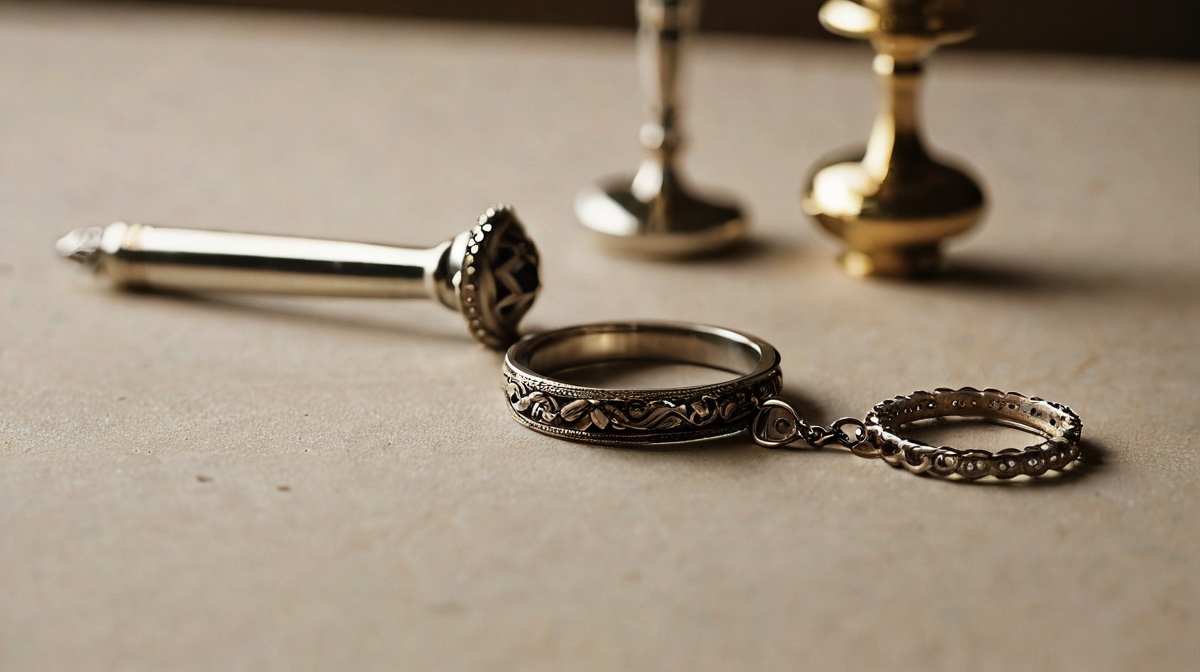
Some devices are designed to secure through an existing piercing rather than relying on a ring alone, most commonly through a Prince Albert. The appeal is obvious, since it addresses the fit problem that ring-based devices have. The trade-off is equally obvious once stated: it concentrates the security of the whole device on a piece of tissue that was pierced for decoration rather than engineered to be a fixing point.
Take that decision with a piercer who can see the piercing in question, not from a product description. Ask them whether the piercing is robust enough, what gauge and jewellery would suit, and what warning signs would mean stopping. This is also a design that narrows your options in a hurry. Think hard about how the device comes off quickly in an emergency, which the chastity cage safety guide treats as non-negotiable for any arrangement.
Placements worth a conversation before you buy
Rather than a list of piercings that are fine and piercings that are not, the useful test is positional. A placement that sits where the ring rests, where the device closes, or where an edge bears down, is the sort that needs thinking about. So is anything with jewellery prominent enough to catch. Placements further from where the device carries load generally cause fewer problems, but generally is doing real work in that sentence, because devices differ and so do bodies.
One move is genuinely reliable: take the device and the jewellery you actually own to a piercer and have them look at the combination. It takes ten minutes. It answers the question for your body specifically, which no article can. If you are still choosing a device, going in that order is better: work out what your piercing can live with, then buy accordingly.
When to ask a piercer, and when to see a doctor
Roughly, the division runs like this. A piercer is the person for questions about the piercing itself: whether it is healed, what jewellery suits it, whether a placement and a device can coexist, and whether something has started to migrate. They see this constantly and they can look at yours.
A doctor is the person for anything that looks like infection or will not settle. Increasing pain, spreading redness, heat, discharge, fever or bleeding that does not stop are medical questions, and so is any of the standard device warning list: numbness, pins and needles, or skin turning blue, grey or very pale. Take the device off for any of those and do not wait to see whether it improves.
What neither of these is, is a forum. Community advice is genuinely useful for practical questions about what worked for people, but a piercing that is behaving oddly is a thing that needs looking at by someone qualified, and a well-meaning thread is not that. For everything else, the guides library covers the practical side.
Questions people ask
Can you wear a chastity cage with a genital piercing?
Many people do, once the piercing is fully healed and the jewellery suits the device. The variables are placement, the shape of the jewellery, and where the device puts pressure. A healed piercing that sits away from the ring and has smooth, low-profile jewellery is a very different proposition from a fresh one under a load-bearing edge.
How long after a piercing can you wear a chastity device?
There is no number that applies to everyone, and anyone who gives you one has not looked at your piercing. Healing times vary widely by placement, by individual, and by how the piercing has actually gone. The right answer is to ask the piercer who did it, and to wait for them to say it is settled rather than for a date on a calendar.
Can metal jewellery react with a metal chastity cage?
Two different metals in contact in a moist environment can behave differently than either does alone, and rubbing between them can also wear surfaces or scratch a coating. The practical problems people report are irritation, discolouration and reactions to metals such as nickel. If either the jewellery or the device is of unnamed metal, that is a reason for caution rather than a reason to experiment.
Which piercings are a problem with a chastity device?
Broadly, ones that sit where the device carries weight or where jewellery can catch on bars, slots or the ring. That includes placements near the base, and any jewellery that protrudes enough to snag. Rather than working from a list, take your device and your jewellery to a piercer and ask them to look at the specific combination.
What are the signs a piercing and a device are not getting on?
New or increasing soreness at the piercing, swelling, discharge, bleeding, a piercing that starts to look shallower or sits differently, or skin colour changes anywhere under the device. Take the device off for any of them. Signs of infection or a piercing that appears to be moving are matters for a doctor or a piercer, not a forum thread.
Take it past the theory
Guides get you the shape of it. People get you the rest. Find others who practise control and denial and are happy to talk.
Find people who share it →