Padlocks for chastity cages: sizes, metals, tags and the cutter question
A padlock for a chastity cage is chosen by fit rather than by security: the shackle has to pass through the hole in the device and span the parts it joins, and the body has to sit flat enough not to press into you when you sit down. Brass and plastic are far easier to cut off in an emergency than hardened steel, which matters more here than resistance to attack. Many people use numbered plastic seals instead of a lock for long stretches, because a seal records tampering while staying trivial to remove the moment something goes wrong.
What it is: The small separate fastener that holds a cage assembly closed, usually a miniature padlock or a numbered plastic seal, and the one component that is almost always chosen by fit rather than by security.
What the public record shows
- On most cage designs the lock is not part of the device. It is a separate object that has to pass through a hole of a fixed size, which means the hole decides what you can buy.
- Two dimensions decide whether a padlock fits: the shackle diameter, which has to pass through the hole, and the shackle clearance, which has to span the parts being joined.
- A third dimension decides how it feels: the body width and depth, which set how far the lock projects from the device and therefore what you sit on.
- Brass does not rust. It develops a surface patina instead, which is cosmetic rather than structural.
- Cheap steel padlocks are usually plated rather than solid stainless, and plating wears first at the moving parts, which is where corrosion then starts.
- Numbered plastic seals are a different mechanism entirely. They do not resist force, they record tampering: each carries a unique number, the seal cannot be reclosed once opened, and a replacement carries a different number.
- Combination padlocks replace a physical key with a number, which is why they turn up in arrangements where the keyholder is not in the same place as the wearer.
- Every fastener in this category can be cut. What changes is the tool: household cutters or scissors deal with a plastic seal, small side cutters or bolt cutters deal with a soft brass shackle, and hardened shackles are sold specifically because they resist bolt cutters.
Documented concerns
- A lock chosen for security is usually the wrong lock. Nothing here is protecting property from a thief, so a harder shackle adds nothing except a harder emergency cut.
- This is a wet environment. Showers, soap residue, sweat and urine all reach the mechanism, and a seized lock is a lock that will not open with its own key.
- Dissimilar metals in constant contact corrode faster than either does alone, and the salt in sweat accelerates it. A steel shackle sitting in a hole in a different alloy is exactly that situation.
- A lock that projects becomes a pressure point at the base of the device and a shape under clothing, and both problems are felt most while seated.
- The realistic failure is a lost, bent or corroded key rather than a defeated lock, which is an argument for spares rather than for strength.
- Combination locks fail in their own ways: a forgotten number, a stiff dial, or a keyholder who is unreachable at the moment the number is needed.
- Plastic seals stop nothing. They are an honesty mechanism, and an arrangement that treats one as a restraint has misunderstood what it bought.
Our editorial reading, not a test result: the lock is the one part of a chastity setup where the ordinary instinct is exactly backwards. Everywhere else in life a stronger lock is a better lock. Here the lock is a tamper indicator on a device that is already defeated by anybody willing to slip a base ring, so the qualities worth paying for are fit, corrosion resistance and easy removal, in that order. Choose the smallest lock that passes through the hole and sits flat, prefer brass or a numbered seal over a hardened shackle, keep at least one spare key somewhere that does not depend on a person answering a message, and understand before you need it which tool takes off the thing you have just closed.
Every discussion about chastity hardware is a discussion about the cage. The lock gets treated as an accessory, which is odd, because it is the only part that decides whether the assembly is closed, and it is usually the part that fails first. This page is about that small object: what actually has to fit, what the material choice changes, what a numbered tag really does, and how the thing comes off when it needs to.
We have not tested any of these products, there is no score on this page, and no maker is named. What follows is the mechanics of the category plus our reading of it.
The lock is the part nobody specifies
Most cages ship with a hole rather than with a lock. Some kits include a small padlock or a bag of plastic tags, and even then people replace them, so almost everybody ends up choosing this component themselves without any guidance from the maker.
That produces a specific mistake, which is buying a good lock. The instinct is reasonable and it is wrong here. A padlock on a shed is resisting somebody who wants what is inside. A padlock on a cage is resisting nobody, because a device can generally be defeated by a wearer willing to work at the base ring, and any wearer with a pair of cutters has ended the matter regardless of what the lock is made of. The lock is not a barrier. It is a signal that the assembly has not been opened.
Once you accept that, the buying criteria change completely. Fit first, corrosion resistance second, easy removal third, and security nowhere on the list.
The two measurements that decide fit
Shackle diameter is the first. This is the thickness of the metal loop, and it has to be smaller than the hole in your device. A hole drilled for a slim shackle will not accept a chunkier one, and forcing the issue damages the device rather than the lock.
Shackle clearance is the second. This is the open space inside the loop, and it has to span whatever the lock is joining, usually a pin or the two halves of an assembly. Too short and it will not close. Far too long and you have a loop of loose metal moving around against skin all day.
Then there is the dimension nobody puts on a spec sheet: how far the body of the lock sticks out. That is what you sit on, what shows under close clothing, and what catches on a waistband. Two locks with identical shackles can behave completely differently on the body because one has a slim body and the other a fat one. Given a choice, take the smaller body every time.
If your device uses a pin-and-post architecture rather than a hasp, the geometry is worth understanding before you shop. The two-part tube, ring and pin design is the common case, and on those the lock is doing nothing more than stopping the pin from lifting out.
Brass, steel and plastic
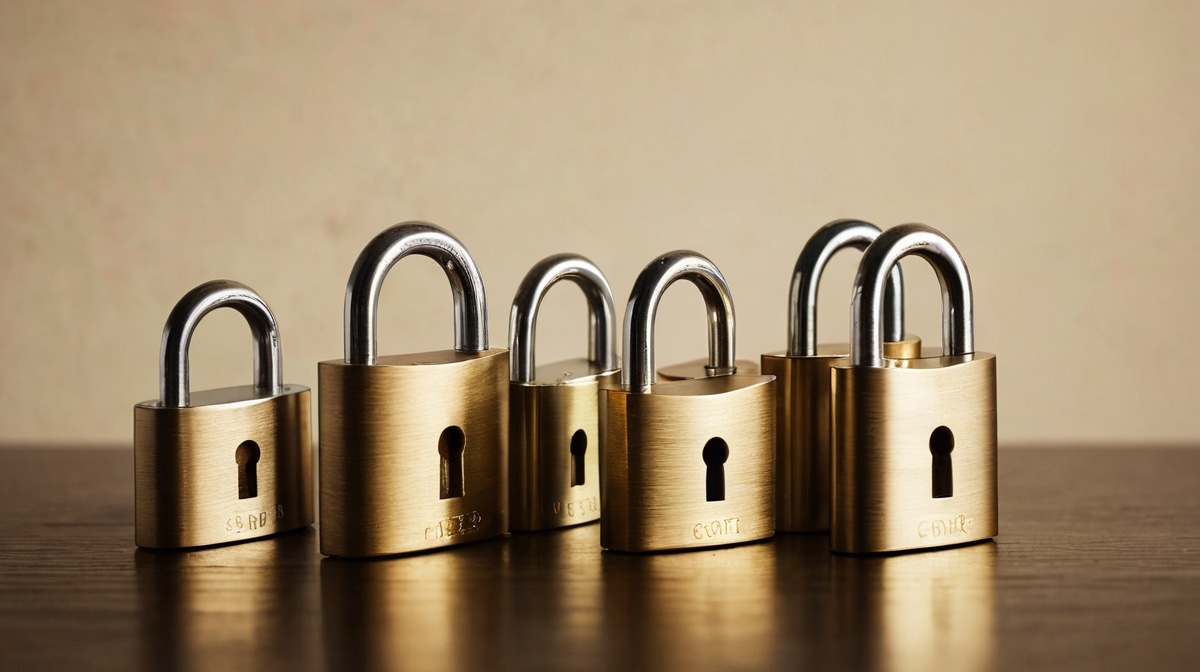
Brass is the traditional choice for small padlocks and it suits this job well. It does not rust. It develops a dull patina, which is a surface effect rather than a structural one. It is soft, which is a disadvantage in a bike lock and an advantage here, since a soft shackle cuts without a workshop.
Steel comes in two very different forms and the price tells you which one you have. Inexpensive steel padlocks are typically plated, and the plating wears at the moving parts first, so a lock that looks fine on the outside can be corroding exactly where the mechanism lives. Solid stainless is a different proposition and holds up better in the wet, at a price. Hardened shackles are a third category again, sold specifically to resist bolt cutters, which is the last property you want on your own body.
Plastic covers two different things. Small plastic padlocks exist and are essentially symbolic, which for some arrangements is exactly right. Numbered seals are the more interesting option and get their own section below.
The material comparison across the device itself follows similar logic, and our chastity cage materials guide works through it. The short version transfers: the material that resists an attack is the material that resists you.
Keyed against combination
A keyed padlock is simple and it fails simply. The key gets lost, bent or corroded, and the answer is spares kept in more than one place. Small keys are easy to lose and easy to duplicate, and there is no reason to be precious about having several.
A combination lock replaces the key with a number, which changes the logistics rather than the security. A number can be sent in a message, sealed in an envelope, or held by someone in another country, which is why these show up in arrangements run at a distance. It also introduces new failure modes: the number gets forgotten, the dial stiffens in a wet environment, or the person holding the number is asleep when you need it.
Either way, the same rule applies as with any keyholding arrangement: the wearer needs a route out that does not depend on somebody replying. That principle sits at the centre of our chastity cage safety guide, and no fastener choice changes it.
What numbered seals actually do
Numbered plastic seals come from industry rather than from this hobby. The same idea secures shipping containers, utility meters and equipment that has been locked out for maintenance. Each seal carries a unique number, it closes once, and opening it destroys it. You cannot put it back.
The mechanism is therefore not force, it is record. The keyholder writes down the number, or photographs it, and any later inspection either shows the same number or shows that something happened. A wearer who opened the device cannot hide it, because a replacement seal will carry a different number.
Two things make this popular for long stretches. It costs almost nothing, so a plan built around several weeks of wear does not need a lock that survives several weeks in a shower. And it comes off with scissors, which means the emergency route stays trivial while the honesty structure stays intact. That combination is genuinely hard to get from a metal lock.
The obvious limitation is that a seal restrains nothing. Anyone can remove one in seconds. If the arrangement depends on the wearer being physically unable to open the device, a seal is the wrong tool, and it is worth asking whether that requirement is a good idea in the first place. The category-wide look at devices that remove your exit covers why a plain, cuttable fastener is the benchmark that fancier mechanisms have to beat.
Corrosion, which is the failure you will actually meet
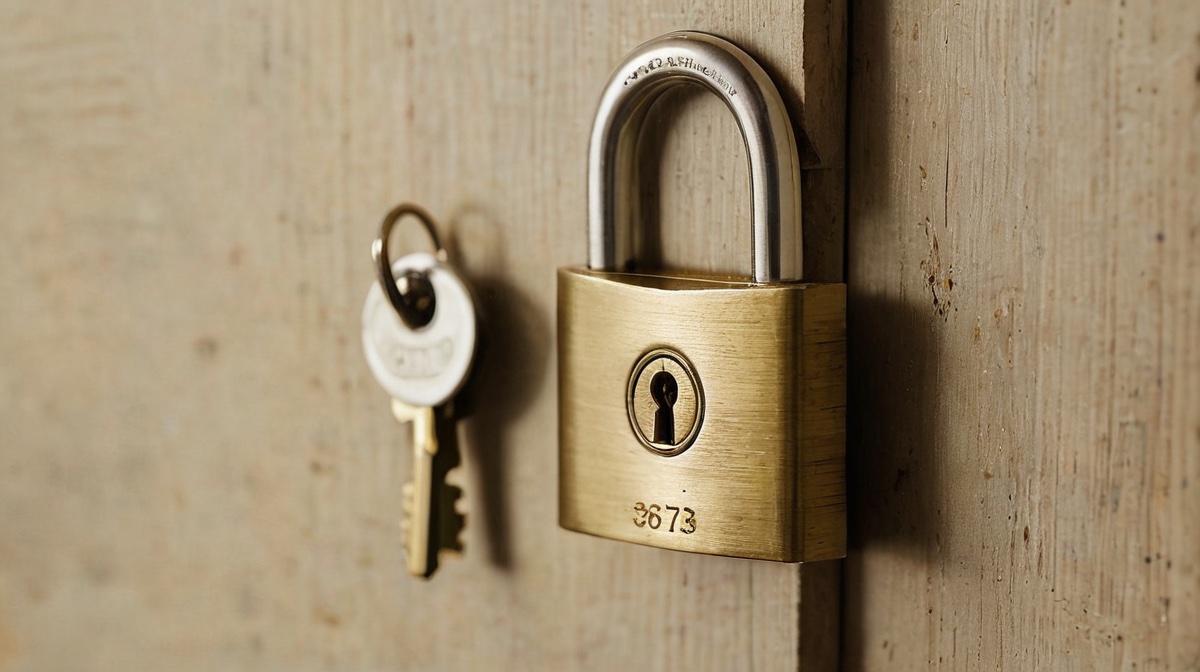
This hardware lives in the shower. Soap residue, sweat and urine reach the mechanism, and small locks have small mechanisms with no real sealing. What happens is not dramatic: the lock gets stiff, then stiffer, then one day the key turns and nothing else does.
Two habits reduce it. Rinse the lock with clean water when you rinse yourself, since the salt and soap are the problem rather than the water. And dry it, because a lock that spends its life damp fails much sooner than one that dries out between showers.
Galvanic corrosion is the version people do not expect. Two different metals in constant contact, with a bit of salty moisture between them, corrode faster than either does alone. A steel shackle sitting permanently in a hole in a different alloy is that setup exactly. It is one more argument for brass, and one more argument for replacing the lock periodically rather than treating it as permanent hardware.
Replace a stiff lock rather than working it loose. A padlock costs very little, and the cost of one that seizes while closed is measured in a completely different currency.
The cutter question
Decide how the lock comes off before you close it. That sentence is the entire safety content of this page.
For a plastic seal, scissors or nail clippers. For a soft brass shackle, small side cutters or bolt cutters. For a hardened shackle, possibly neither, and then you are looking at a rotary tool being used near skin, which is a genuinely bad situation and a foreseeable one. Choose the fastener you can remove.
Keep whatever tool you need where the wearer can reach it without asking permission. A cutter in a drawer at home is not a plan if the arrangement involves travel. And know the limit of your own improvisation: if the device will not come off and there is pain that builds, numbness, a change in skin colour, swelling, or difficulty urinating, that is an emergency department rather than another attempt with the wrong tool. Staff there have seen this before, they have proper cutting equipment, and the embarrassment of asking is the cheapest part of the whole event. Delay is what turns a manageable problem into a serious one.
If you are still assembling the rest of the setup, how to choose a chastity cage covers the decisions that sit above this one. Get those right and the lock becomes what it should be: the cheapest, dullest, most replaceable part of the whole arrangement.
Questions people ask
What size padlock fits a chastity cage?
The one whose shackle passes through the hole in your device, which means the hole is the specification and not the lock. Measure the hole, then look for a shackle diameter smaller than it, and check the shackle clearance is long enough to span the parts being joined. After that, pick the smallest body you can find, because the body is the part that projects from the device and presses into you when you sit down.
Are brass or steel padlocks better for chastity?
They fail differently rather than one being superior. Brass does not rust, it forms a surface patina, and it is soft enough to cut off without specialist tools. Plated steel is harder and cheaper, and the plating wears first at the moving parts, which is where a wet environment then attacks it. Given that nothing here is protecting property, the softer metal is usually the more sensible choice, because the emergency cut is a more likely event than an attack on the lock.
What are the numbered plastic tags used for in chastity?
They are tamper-evident seals rather than locks. Each carries a unique number, the seal cannot be reclosed once it has been opened, and a fresh one has a different number, so a keyholder who recorded the original number can tell whether the device was opened. They are popular for long stretches and at a distance for two reasons: they cost almost nothing, and they come off with household cutters, so the emergency route stays trivial.
How do you get a padlock off in an emergency?
You cut it, and the right tool depends on what you bought, which is the argument for deciding that before you close it rather than after. A plastic seal goes with scissors or nail clippers. A soft brass shackle goes with small side cutters or bolt cutters. A hardened shackle may resist bolt cutters entirely and need a rotary tool, which is not a thing to be operating near yourself under stress. If the device will not come off and there is pain, numbness, colour change or swelling, stop improvising and go to an emergency department.
Ask someone who owns one
A public record tells you how a product is documented. People who have lived with it will tell you the rest, including the parts no spec sheet mentions.
Find people who own it →